Why Communication and Collaboration are now Critical Leadership Skills in Education
Education has always been about people. But in today’s environment of rising pressures, stretched resources, increasing accountability, staff burnout, changing student expectations, and rapid technological change, communication and collaboration are no longer simply “nice to have” leadership qualities.
They are performance drivers.
The schools, colleges, universities, and education trusts that will thrive in the future are those that combine academic excellence with relational excellence. Their success depends on their ability to turn relationships into results.
That is exactly what I help organisations do.
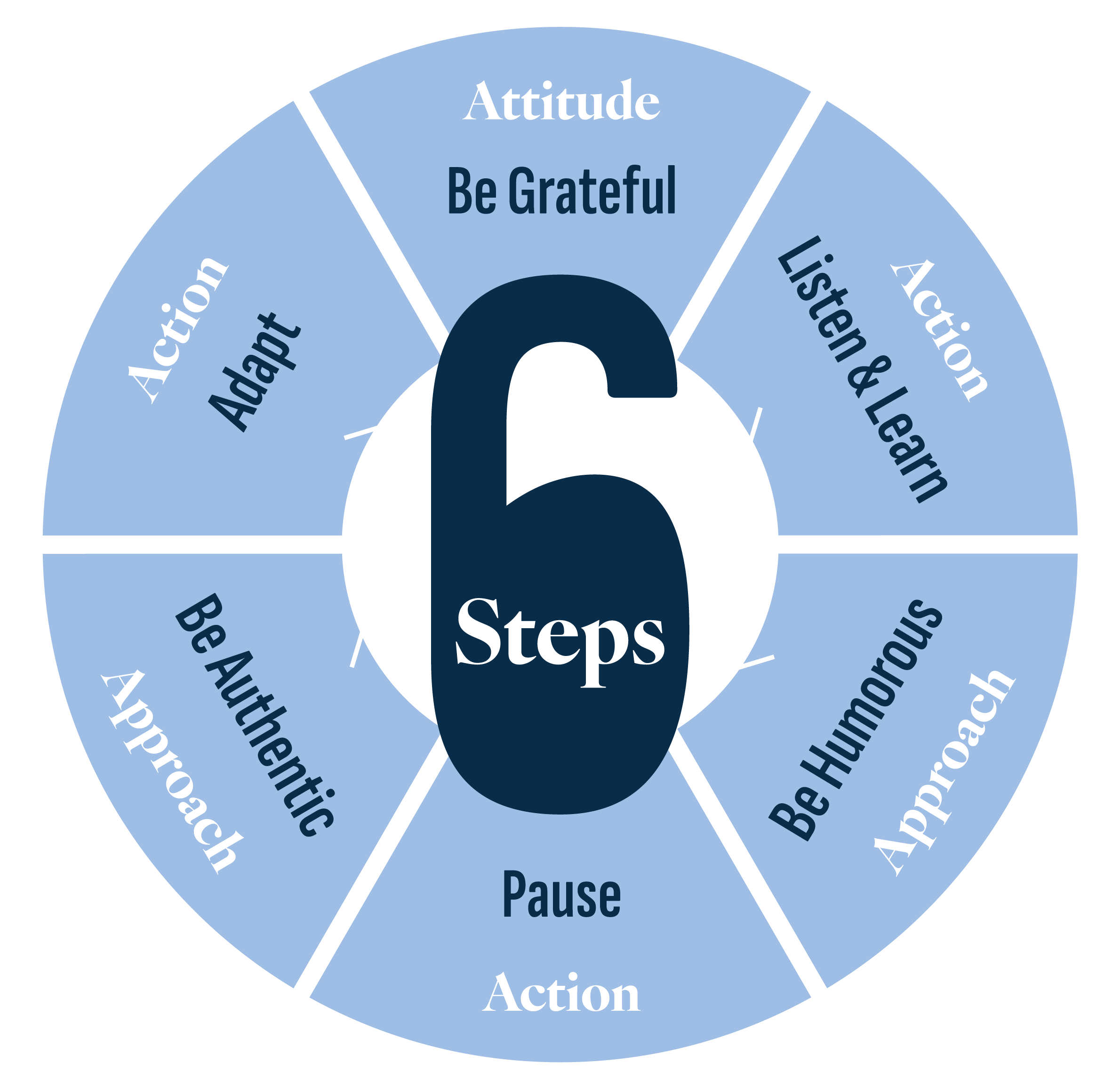
Using my proven Relationships to Results™ 6-Step Model, I help leaders, educators, and teams make small but powerful 5% shifts in how they communicate and connect — shifts that can transform culture, engagement, retention, collaboration, and performance.
When leaders improve the quality of their conversations, the organisational impact can be substantial.
Results from this work have included:
A significant improvement in cross-department collaboration
Increased employee engagement and morale
Stronger stakeholder trust and alignment
Reduced conflict and communication breakdowns
Improved retention and team performance
These are not “soft” outcomes.
They are measurable organisational results driven by stronger human relationships.
In education today, they are leadership skills.
Across the sector, leaders are facing unprecedented complexity:
Teacher recruitment and retention challenges
Increased workloads and staff wellbeing concerns
Rising parental expectations
Budget pressures
Curriculum reform
Digital transformation and AI disruption
Greater scrutiny and accountability
The ongoing need to build inclusive, psychologically safe environments
In this environment, technical expertise alone is not enough.
Educational leaders must also know how to:
Build trust quickly
Lead difficult conversations
Collaborate across departments and teams
Navigate conflict constructively
Influence stakeholders with clarity and confidence
Create cultures where people feel valued, heard, and motivated
Lead through uncertainty and change
Because ultimately, schools and educational institutions succeed or fail through people.
And people perform best when relationships are strong.
Research consistently shows that organisations with strong collaboration and positive working relationships outperform those with poor communication cultures. In education, this impacts everything from staff retention and wellbeing to innovation, student outcomes, parental engagement, and organisational culture.
The highest-performing educational environments are not simply those with the best systems or policies.
They are the ones where people communicate effectively, collaborate openly, and work together with trust and clarity.
That is why I was recently brought in to work with senior leaders across a large educational organisation.
The group included executive leaders, department heads, pastoral leaders, and operational managers — all responsible for leading teams, driving performance, and supporting people in high-pressure environments.
Their challenge was not a lack of capability or commitment.
It was this:
How do we improve the quality of our communication and collaboration so that relationships drive measurable educational and organisational results?
Because despite the strategy meetings, frameworks, and operational plans, one truth became clear:
The real work of leadership happens conversation by conversation.
And every conversation has consequences.
A conversation with a teacher can increase motivation or create disengagement.
A conversation with a parent can build trust or create tension.
A conversation between departments can improve collaboration or reinforce silos.
A feedback conversation can unlock growth or trigger defensiveness.
A leadership conversation during uncertainty can create clarity or confusion.
The leaders who understand this create stronger cultures, stronger teams, and ultimately stronger outcomes.
The Real Leadership Challenge in Education
The technical side of education matters.
But leadership today is increasingly relational.
Educational leaders are no longer simply responsible for operational delivery or academic standards.
They are responsible for culture.
And culture is shaped through communication.
The challenge is that many leaders were promoted because of their expertise, experience, or technical competence — not necessarily because they had been trained to lead conversations, navigate conflict, or build collaborative relationships.
Yet those are now the skills that matter most.
Today’s leaders in education must know how to:
Hold courageous conversations with empathy and clarity
Give feedback in ways that improve performance rather than damage confidence
Build trust across teams and departments
Lead through emotional pressure and uncertainty
Manage competing personalities and priorities
Create psychological safety
Influence without relying on authority alone
Reduce friction and communication breakdowns
Build alignment around shared goals
Because leadership is no longer about command and control.
It is about connection and influence.
And that requires relational intelligence.
Relational intelligence is the ability to communicate with emotional awareness, adaptability, clarity, empathy, and impact.
It is the difference between a leader who simply manages tasks and a leader who inspires trust, collaboration, and performance.
The best educational leaders understand this.
They know that relationships are not the soft edge of performance.
They are the hard edge.
The Cost of Poor Communication in Education
Poor communication carries an enormous hidden cost.
In education, it often shows up as:
Staff disengagement
Burnout and turnover
Departmental silos
Low morale
Increased conflict
Resistance to change
Lack of accountability
Reduced collaboration
Misalignment between leadership and teams
Frustration between staff, parents, and stakeholders
The challenge is that these issues are often treated as operational problems rather than relational ones.
But in many cases, the root cause is communication.
When people do not feel heard, valued, trusted, or understood, performance suffers.
Collaboration breaks down.
Innovation slows.
Energy drains from the organisation.
And leaders spend increasing amounts of time managing tension, misunderstandings, and interpersonal friction.
In contrast, when communication improves:
Trust increases
Collaboration becomes easier
Teams become more resilient
Staff engagement improves
Conflict reduces
Change becomes easier to navigate
Performance conversations become more productive
People feel more connected to purpose and vision
Better conversations create better cultures.
And better cultures create better results.
Why Collaboration Matters More Than Ever
Education has become increasingly interconnected.
No single department, teacher, or leader can succeed in isolation.
Student success now depends on collaboration across:
Teaching teams
Pastoral care
Senior leadership
Support services
Parents and carers
External partners
Multi-academy trusts
Universities and governing bodies
But collaboration does not happen automatically.
It requires trust.
It requires psychological safety.
And it requires leaders who know how to create environments where people feel safe to contribute ideas, challenge constructively, and work together effectively.
The problem is that under pressure, communication often deteriorates.
People become reactive.
Departments retreat into silos.
Conversations become transactional.
Listening decreases.
Assumptions increase.
And relationships weaken.
That is why communication and collaboration are now strategic leadership priorities.
Because when relationships strengthen:
Teams work faster and more effectively
Innovation improves
Problems are solved more collaboratively
People feel more engaged and motivated
Cultures become healthier and more resilient
The organisations that will outperform in the future are not simply those with the best processes.
They are the ones with the strongest relationships.
Why These Skills Matter in the Age of AI
Education is becoming more technologically advanced.
AI is changing how people learn, teach, communicate, and work.
Technology can improve efficiency.
Data can improve insight.
Systems can improve consistency.
But leadership is still fundamentally human.
Trust still matters.
Connection still matters.
Influence still matters.
People still want to feel heard, valued, respected, and understood.
And in a world where technology is accelerating, human communication skills become even more important — not less.
Because the future of leadership will belong to those who can combine technical capability with relational capability.
The leaders who can:
Communicate clearly under pressure
Build trust quickly
Create emotionally intelligent cultures
Collaborate across complexity
Navigate conflict constructively
Inspire people through uncertainty
Turn conversations into action
These are no longer “soft skills.”
They are competitive advantages.
Final Thought
The most successful leaders in education are not simply experts in curriculum, operations, or strategy.
They are experts in people.
Because leadership happens relationship by relationship.
Conversation by conversation.
Moment by moment.
And the leaders who learn how to strengthen those relationships create cultures where people thrive, collaborate, and perform at their best.
That is why communication and collaboration are no longer soft skills in education.
They are business-critical performance skills.
And the organisations that recognise this first will create a significant advantage — not only in performance, but in culture, engagement, retention, wellbeing, and long-term success.