Why Communication and Collaboration are now Critical Leadership Skills in Banking.
Communication and collaboration are no longer “soft skills” in banking. Instead they are commercial performance drivers. The organisations that will outperform in the future are those that combine technical excellence with relational excellence. Their success depends on their ability to turn relationships into results. Nick Saunders turns relationships into measurable business results using his Relationships to Results™ 6-Step Model.
When leaders improve how they communicate and connect, the commercial impact can be substantial.
Results from this work have included:
A £2 million contract won through stronger client connection
A 23% improvement in customer retention
A 22% increase in employee engagement
These are not “soft” outcomes. They are measurable business results driven by stronger human relationships.
For years, communication and collaboration were labelled “soft skills.”
In banking today, they are performance skills.
In an industry facing economic uncertainty, geopolitical volatility, AI disruption, increasing regulation, and relentless pressure to deliver faster and better client outcomes, the ability to communicate effectively is no longer optional. It is commercial.
Research shows that companies with strong collaboration and positive working relationships are, on average, 21% more profitable. The organisations that outperform are not simply those with the best strategy — they are the ones whose people communicate, challenge, influence, and collaborate most effectively.
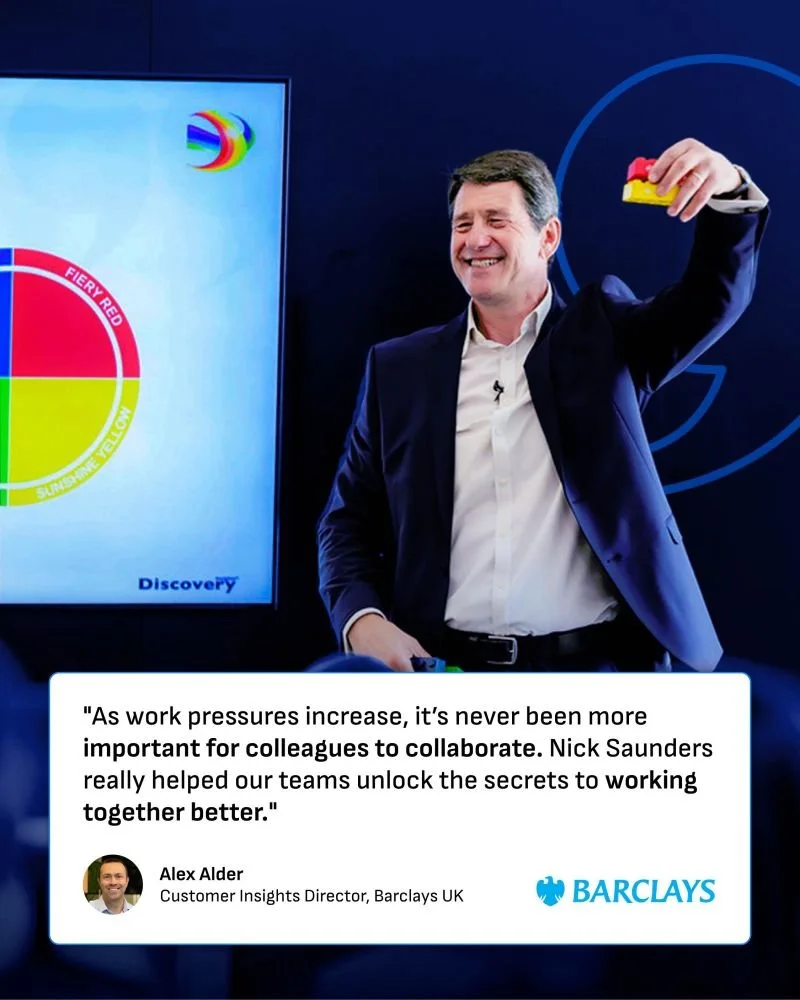
That is why I was recently brought in to work with 80 Managing Directors and senior leaders at one of the UK’s largest banks.
Their roles spanned client leadership, finance, operations, and people management, with many responsible for teams of up to 300 employees.
Their ambition was clear: to become the UK’s leading corporate bank.
But despite their technical expertise, one challenge consistently surfaced above all others: How do we improve the quality of our communication and collaboration — internally and externally — so that relationships drive measurable business results?
The Real Leadership Challenge in Banking
The technical side of banking is only part of the role.
Today’s banking leaders must also be exceptional relationship builders.
They must know how to:
Challenge peers constructively while maintaining trust
Hold difficult performance conversations with clarity and empathy
Navigate conflict without damaging relationships
Influence clients with confidence
Lead teams through uncertainty and change
Build collaboration across silos
Create trust quickly in high-pressure environments
In other words, their success depends on their ability to turn relationships into results.
Because every conversation has consequences.
A leadership conversation can improve engagement or destroy morale.
A client conversation can strengthen loyalty or weaken trust.
A feedback conversation can unlock performance or create defensiveness.
The highest-performing leaders understand this. They know that relationships are not the soft edge of business performance — they are the hard edge.
The Shift from “Soft Skills” to Commercial Impact
The leaders I worked with recognised that communication is not about “being nice.” It is about driving outcomes.
They needed to:
Lead through connection, not control
Build trust-based cultures
Increase collaboration across teams
Improve client relationships
Influence more effectively
Reduce friction and inefficiency
Create environments where people perform at their best
Because when communication improves, results improve.
Better conversations lead to:
Stronger client retention
Faster decision-making
Greater employee engagement
Reduced conflict
Increased collaboration
Higher commercial performance
That is why organisations are increasingly investing in relational intelligence — the ability to communicate with emotional awareness, adaptability, clarity, and influence.
The Relationships to Results™ 6-Step Model
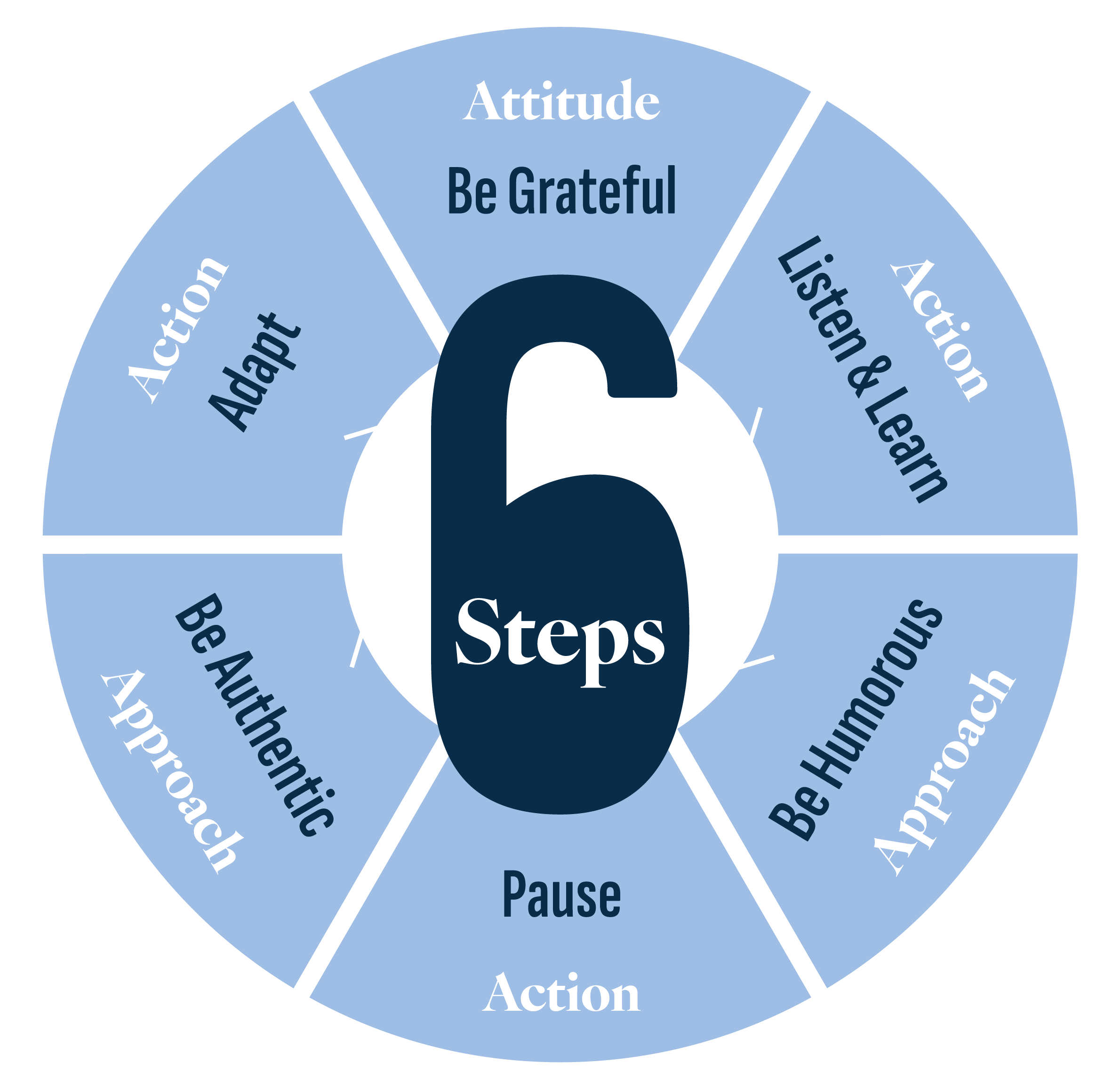
To help these leaders strengthen communication and collaboration, I introduced my Relationships to Results™ 6-Step Model.
The model is built around six practical 5% shifts that transform the quality of conversations, relationships, and ultimately business outcomes.
Small behavioural shifts often create disproportionately large commercial results.
1. Pause
Under pressure, people react emotionally before they respond strategically.
A pause creates space between stimulus and response.
It allows leaders to move from emotional reaction to thoughtful communication — especially in high-stakes conversations involving clients, conflict, performance, or change.
The ability to pause creates calm, clarity, and control.
And in leadership, composure is contagious.
2. Listen and Learn
Albert Einstein once said:
“I have no special talent. I am only passionately curious.”
The best communicators are deeply curious.
They ask questions.
They listen carefully.
They notice what is said — and what is left unsaid.
Too many professionals listen to reply.
Exceptional leaders listen to understand.
One of the most powerful forms of listening is evaluative listening — listening not just for information, but for:
Content
Emotion
Intent
When people feel genuinely heard, trust accelerates.
And trust is the foundation of collaboration.
3. Adapt
Once we understand the other person, we can adapt our communication style to connect more effectively.
This is not about being fake or changing personality.
It is about behavioural flexibility.
The best leaders know how to adjust their tone, pace, energy, and communication style depending on the situation and the individual in front of them.
A highly analytical stakeholder may need detail and precision.
A relationship-driven client may need warmth and reassurance.
A stressed employee may need empathy before solutions.
The ability to adapt is one of the most underrated communication skills in business today.
4. Be Authentic
People trust leaders who feel genuine.
Authenticity creates credibility.
Human beings are remarkably good at spotting insincerity, and trust disappears quickly when communication feels forced or performative.
Authentic leaders:
Take ownership when they make mistakes
Speak honestly
Challenge constructively
Defend their teams when needed
Continue learning and developing
Behave consistently under pressure
Authenticity is not about saying everything you think.
It is about being real, trustworthy, and emotionally intelligent in how you communicate.
5. Be Humorous
Humour, used appropriately, is a powerful leadership tool.
Not humour at someone else’s expense.
Not performing.
But the ability to laugh at yourself.
Self-deprecating humour demonstrates humility, humanity, and confidence. It lowers tension, builds connection, and makes leaders more relatable.
Research consistently shows that leaders who use humour appropriately are perceived as more approachable, trustworthy, and emotionally intelligent.
The key is balance.
Vulnerability builds trust.
Oversharing damages credibility.
Great leaders understand the difference.
6. Be Grateful
Gratitude may sound simple, but its impact is significant.
People perform better when they feel appreciated.
Recognition strengthens relationships, increases motivation, and improves engagement.
Research from leading gratitude expert Dr Robert Emmons has shown that employees who feel recognised and valued are significantly more motivated and engaged at work.
Gratitude is not weakness.
It is leadership awareness.
And in fast-paced corporate environments, genuine appreciation is often underestimated and underused.
Why These Skills Matter More Than Ever
Banking is becoming more technologically advanced, but business is still fundamentally human.
AI can improve efficiency.
Data can improve insight.
Technology can improve speed.
But trust, influence, collaboration, leadership, and client loyalty still depend on human relationships.
The organisations that will outperform in the future are those that combine technical excellence with relational excellence.
Because ultimately:
Better relationships create better conversations
Better conversations create better collaboration
Better collaboration creates better results
When leaders improve how they communicate and connect, the commercial impact can be substantial.
Final Thought
The most successful banking leaders are not simply experts in finance, risk, or strategy.
They are experts in people.
Because leadership happens conversation by conversation, relationship by relationship.
And the leaders who learn to strengthen those relationships gain a significant competitive advantage.
That is why communication and collaboration are no longer soft skills.
They are business-critical performance skills.