Pause: The Most Underrated Performance Tool in Business
When organisations talk about improving performance, they usually focus on strategy, technology, processes or productivity.
Rarely do they talk about pausing.
And yet, in my experience working with leaders, sales professionals and teams, the simple act of pausing is often the difference between a relationship that creates results and one that creates resistance.
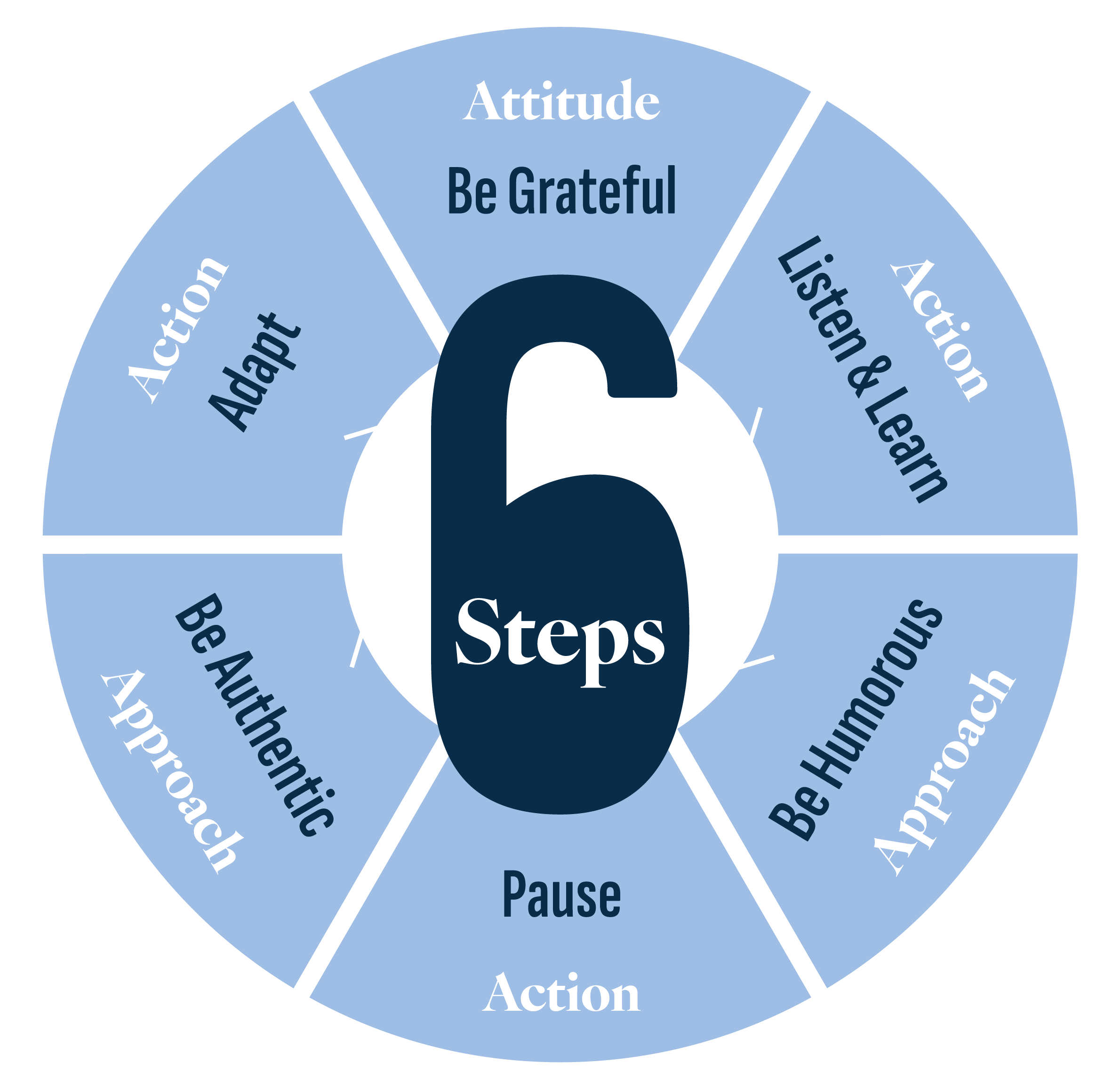
That's why "Pause" is the first step in my Relationships to Results™ 6-Step Model.
Because before you can listen, adapt, influence, collaborate or resolve conflict, you need to create a moment of space.
A pause.
Not a long pause. Not a meditation retreat. Just a deliberate interruption to automatic behaviour.
A 5% shift that can create extraordinary business outcomes.
Results from “pausing”:
NHS Safety Huddles: A Structured Pause That Improves Performance
Many NHS Trusts have introduced "Safety Huddles" — short, deliberate pauses where teams stop, share information, identify risks, and align before continuing work.
In the Royal Brompton & Harefield NHS Foundation Trust, introducing a checklist and team briefing pause before cardiac procedures delivered measurable results:
Over 65% of procedures were completed more quickly.
Nearly two-thirds had reduced screening times, reducing patient radiation exposure.
Staff reported improvements in teamwork, collaboration and safety culture.
This is a powerful example because nothing changed about the medical expertise. The improvement came from creating a pause before action.
Aviation: The Original "Pause Before Action" Industry
British Airways, the RAF and aviation generally use checklists and deliberate pause points before critical decisions.
The aviation industry learned decades ago that expertise alone isn't enough. Pilots pause to verify assumptions, challenge decisions and check understanding before acting.
The result is one of the safest industries in the world.
This is often a useful cross-industry analogy for leadership teams because it reframes pausing as a performance discipline rather than a wellbeing exercise.
Why We Struggle to Pause
Modern workplaces reward speed.
Respond quickly.
Decide quickly.
Move quickly.
React quickly.
But when speed becomes our default setting, we stop thinking and start reacting.
We interrupt.
We make assumptions.
We misread situations.
We send emails we later regret.
We escalate tensions instead of resolving them.
We talk when we should be listening.
In short, we damage the very relationships that drive performance. The irony is that most workplace problems aren't technical problems. They're relationship problems. And relationship problems rarely improve when people move faster.
The Cost of Not Pausing
The numbers tell a powerful story.
According to the latest CIPD Good Work Index, 25% of UK employees—around eight million people—experienced workplace conflict in the previous year. Those who experienced conflict reported significantly lower job satisfaction and were twice as likely to consider leaving their organisation.
Think about that for a moment.
One in four employees.
Not because they lacked technical skills.
Not because systems failed.
But because relationships broke down.
Even more concerning, only 36% of employees who experienced workplace conflict believed it had been fully resolved.
When people don't pause, conversations become confrontations.
Feedback becomes criticism.
Differences become disputes.
And disputes become expensive.
Research commissioned by ACAS estimates that workplace conflict costs UK organisations £28.5 billion every year—equivalent to more than £1,000 per employee. Nearly half a million employees resign annually because of workplace conflict.
Imagine recovering even a small fraction of that cost inside your organisation.
That's the power of a pause.
What Does "Pause" Actually Mean?
Many people hear the word pause and assume it means slowing down.
It doesn't.
It means becoming intentional.
A pause is the moment between stimulus and response.
It's the space where better decisions are made.
For leaders, it might mean pausing before giving feedback.
For managers, it might mean pausing before jumping into problem-solving mode.
For teams, it might mean pausing before reacting to an email, a disagreement or a difficult stakeholder.
In practical terms, the pause may only last a few seconds.
But those few seconds create access to something incredibly valuable:
Choice.
The Leadership Advantage
The most effective leaders I've worked with don't necessarily have all the answers.
They simply create enough space to ask better questions.
When leaders pause, they:
Listen more effectively
Reduce emotional reactions
Improve decision quality
Create psychological safety
Build trust faster
People notice when a leader is fully present.
They notice when they're not rushing to speak.
They notice when they're genuinely listening.
And trust grows.
Trust isn't built through grand gestures.
It's built through small moments of attention.
The Team Advantage
Pause is equally powerful inside teams.
Consider how many workplace misunderstandings begin with assumptions.
Someone sends a brief email.
A colleague interprets the tone negatively.
A response is fired back.
Tension escalates.
Productivity drops.
A relationship deteriorates.
All because nobody paused long enough to check their interpretation.
Recent workplace research found that communication misunderstandings continue to create significant productivity losses, with employees spending substantial time clarifying unclear messages and repairing damaged working relationships.
The pause acts as a circuit breaker.
It interrupts the automatic story we're telling ourselves.
It allows us to ask: "What else could this mean?" "What might I be missing?" "What would happen if I got curious instead of defensive?"
The 5% Shift
One reason organisations overlook relationship skills is because they assume transformational change requires transformational effort.
It doesn't.
The most powerful changes are often small.
A two-second pause before responding.
A breath before entering a difficult meeting.
A moment of reflection before sending an email.
A question instead of an assumption.
These are tiny actions.
But they create compound results.
That's why I talk about 5% shifts.
Not massive overhauls.
Not complicated frameworks.
Just small behavioural changes that improve conversations, strengthen relationships and drive measurable outcomes.
Final Thought
The organisations that consistently outperform their competitors understand something important:
Relationships are not soft.
Relationships are the hard edge of performance.
Every sale depends on a relationship.
Every team depends on relationships.
Every leadership conversation depends on relationships.
Every conflict is ultimately a relationship challenge.
And every one of those outcomes can improve when people learn to pause.
So the next time you're about to react, respond, interrupt or assume, consider this:
What might happen if you paused first?
Because sometimes the smallest gap creates the biggest result.
And in business, that pause might just be worth millions.